For the third year running, Captain Skippy Charters is collaborating with Gray Fish Tag Research — a non-profit out of Pompano Beach, Florida that runs the largest billfish and gamefish tagging program in the country. They've added striped bass to their tagging effort over the last few seasons, and we're one of the participating charter operations on the central Long Island Sound. Anyone fishing with me has the opportunity to be part of that.
What is fish tagging, in plain English?
A fish tag is a small plastic dart about the size of a toothpick, inserted just below the dorsal fin with a single-handed applicator. The tag carries a unique serial number, a reporting phone number, and basic instructions. When that fish is recaptured anywhere — by another angler, a commercial fisherman, or a researcher — they report the tag, and we get back data on how far it traveled, how much it grew, and how long it took.
For striped bass specifically, the tagging program is helping researchers understand the East Coast migration: where the central-Sound spawners winter, how mature breeders move between the Hudson and the Chesapeake, and how a recovering coastal population is rebuilding after the rough years of the late 2010s. Every tag returned is a data point.
The fun part: you name your fish
Here's what makes this different from most tagging programs — when you put a Gray Fish Tag on a fish, you get to name her. The name goes on the tag record. Then, every time that fish gets recaught anywhere on the coast, Gray Fish Tag emails you the update. You're the godparent.
Some of the fish I've tagged on my boat have been recaught hundreds of miles away — one was reported off the Chesapeake about eight months after release. Clients get a real kick out of it. Kids especially. It turns a single catch into a story that keeps unfolding for years.
Which fish get tagged
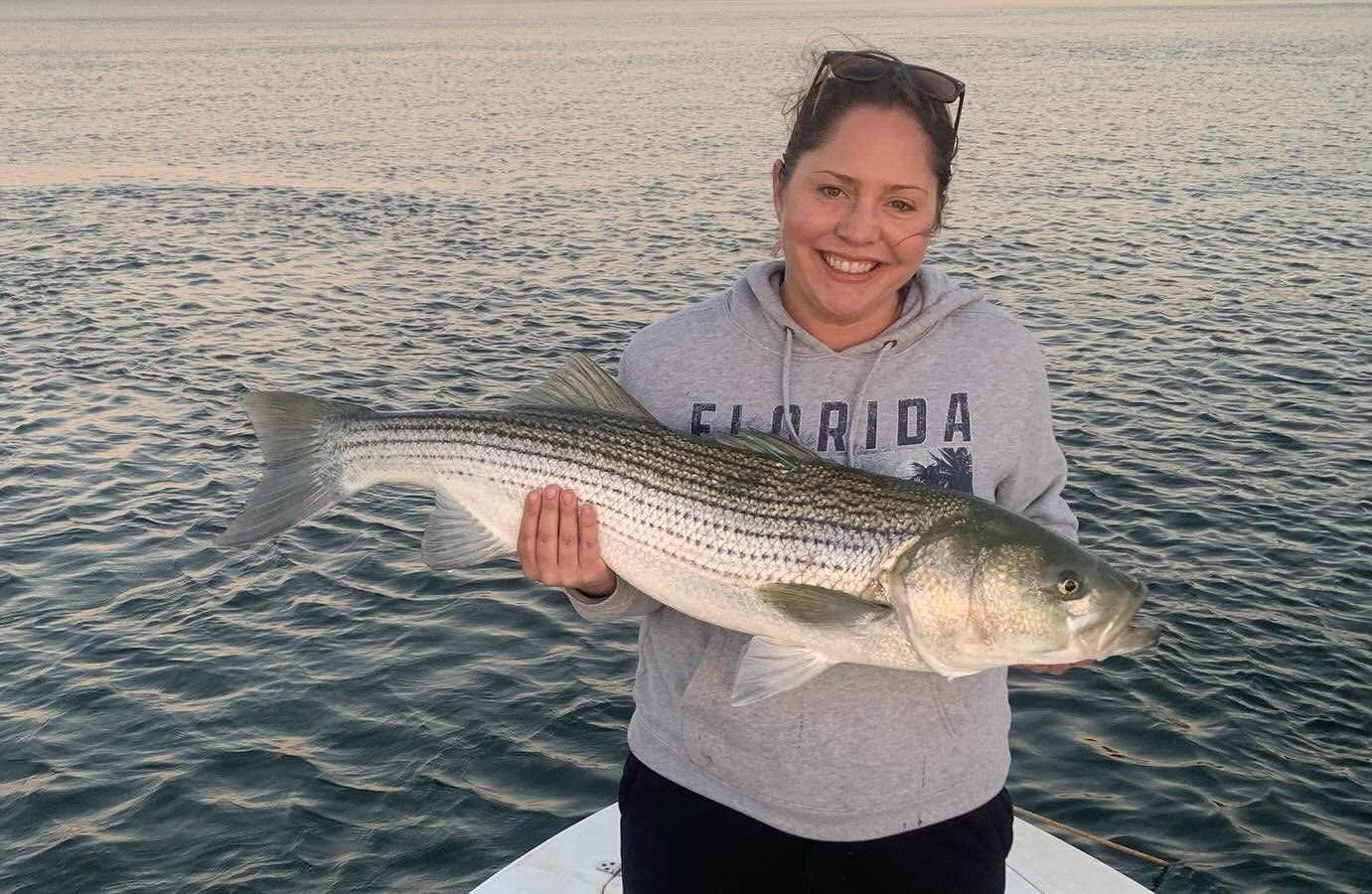
Only over-slot bass — fish that are 31 inches or longer, outside New York's recreational keeper slot. These are the mature spawners, the ones that matter most to the population. They were going to be released anyway, so we put a tag in them on the way back to the water. Slot fish (28 to less than 31 inches) and any fish you decide to keep go in the box without tags.
If we're not seeing fish over 31 on a given trip, we don't tag anything. Not every charter ends up tagging. But on a strong spring or fall day, we'll often put 2–3 tags out on a half-day trip.
You came out for a fishing trip. You leave having contributed to coastal striper science — and with a fish out there carrying your kid's name on it.
How the actual tagging goes
The process is fast and low-stress on the fish. Once we get an over-slot to the boat:
- Quick measurement on the wet mat — length and (if we have time) girth.
- Photo for you and for the tag record.
- Tag is inserted with the applicator — single motion, takes less than a second.
- I record the data: length, location, time, your name, and the name you chose for the fish.
- Fish goes back in the water, swims off strong.
From boatside to release is usually 30–45 seconds. We never lift a big bass by the jaw, we never let her hit the deck, and we don't tag fish that look stressed. The whole point is to help the population, not stress fish unnecessarily.
How to participate
You don't have to do anything special — if we're targeting stripers, the tags are on the boat. When an over-slot fish comes over the rail, I'll ask if you want to tag it. If yes, you pick the name. If no, we release her straight away. There's no extra cost. It's just something extra we offer because we care about the fishery that pays our bills.
Want to tag your own striper?
Book a spring or fall striped bass trip. If we put an over-slot fish in the boat, you'll get the chance to tag, name, and release her — and follow her story.