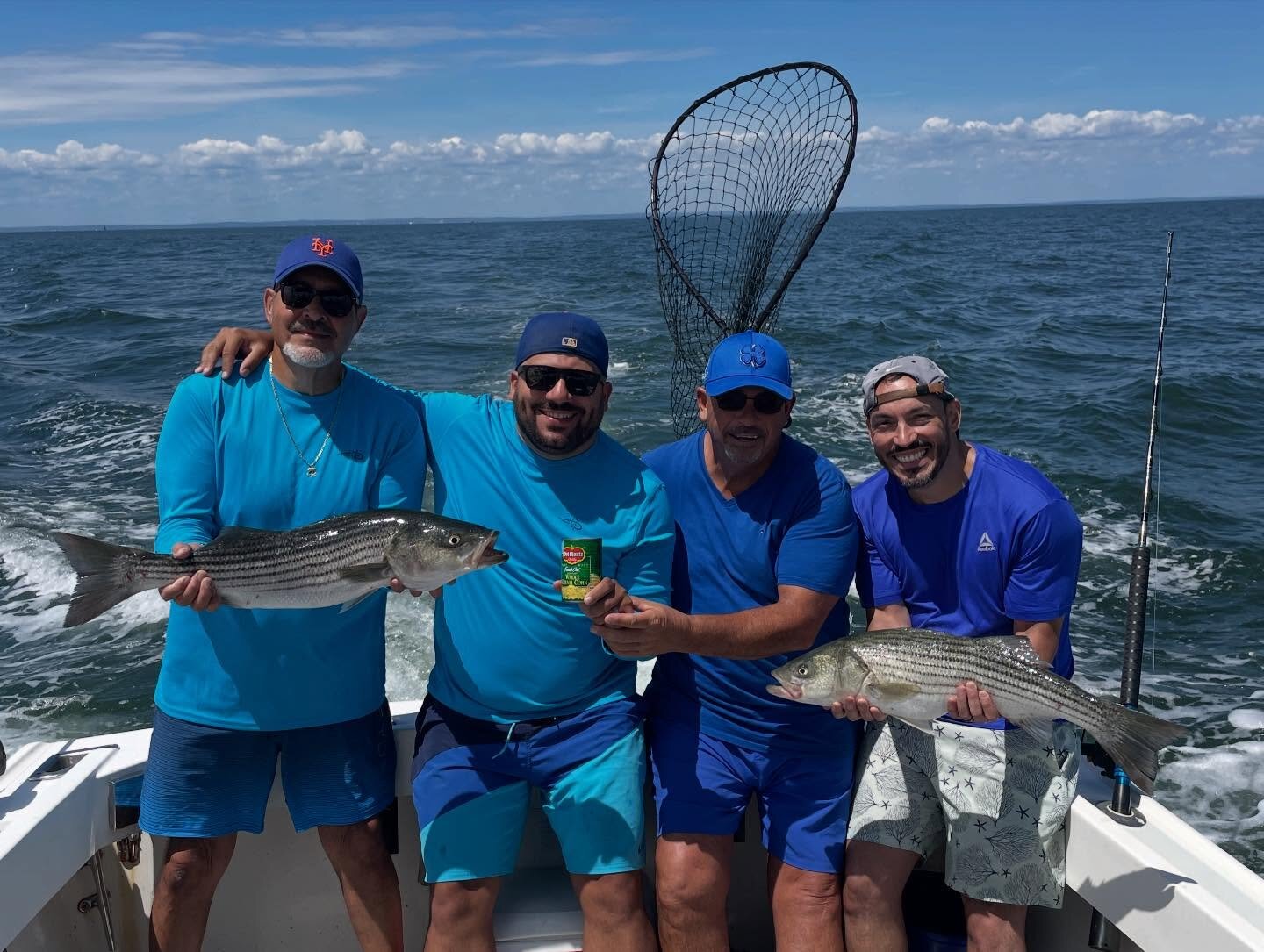
After one of the coldest, longest winters we've had in years, the central Long Island Sound is finally waking up. Water temps are pushing past 50 degrees, and that's the magic number for striped bass. Once that line gets crossed, the fish that have been holding in the Hudson, the Connecticut River mouths, and the deeper Sound basins start showing up on my plotter every single day. Slowly at first. Then in waves. We're somewhere in the early-wave phase right now — and if the past few seasons are any indication, things are setting up for an absolutely epic spring run.
What we're catching, and how
It's a mix right now. We've put schoolies in the boat — fish in the 22–28 inch range that haven't seen a hook all winter and absolutely hammer a soft plastic. We've also boated a handful of bass over 15 pounds in the last week, with one in the high teens that gave a first-time charter angler the fight of his life. Three techniques are all producing:
- Trolling — when the fish are scattered or holding deeper, dragging tube-and-worm rigs or stretch plugs along the contours covers water fast and tells me where they're stacked. This is my workhorse method in the early season.
- Jigging — once I find a school holding tight to structure, we slow down and drop bucktails or soft-plastic shads right on their heads. Light tackle, hands-on, and dead-effective when the bait ball is sitting still.
- Bait — chunked bunker or live eels on a slack tide is old-school for a reason. It also happens to be the easiest setup for first-timers and kids, which is why I always have a bait rod or two rigged when families are aboard.
Why "an epic spring run" looks likely
I don't make that call lightly. But the last two springs have been the strongest I've seen since the early 2010s, and the early signals this year are following the same script: water temps recovered fast once the air warmed, the bunker showed up early in the western Sound, and the bait coming up our way is healthy and abundant. Predator fish aren't shy when forage is everywhere. They're aggressive. They're moving. And when they're moving, they're catchable.
The fish I'm marking right now aren't tournament-class trophies yet — those keep moving east as the water warms — but they're quality. The kind of bass that pulls a 7-foot rod into a deep bend and makes your shoulder remember why you bought the heavy reel. That's what most of my clients come for, and that's exactly what May into early June delivers on the central Sound.
The hardest part about the spring run isn't catching them. It's pulling away from the dock — because every morning out here right now is better than the last.
Regs in plain English
New York's 2026 recreational striped bass slot remains 28 to less than 31 inches, one fish per angler per day, in marine waters. If you're new to this fishery, the short version is: fish between 28 and 31 inches go home, anything bigger or smaller gets released. We treat that line carefully on every trip — accurate measuring board, wet hands, quick photos, fast release. Over-slot fish go right back, and a chunk of them this season are getting tagged through Gray Fish Tag (more on that in a separate post).
If you want in on the run
Half-day private charters are running daily, weather permitting. My boat takes 1–4 anglers at a time — no sharing the rail with strangers, no head-boat pace, and we fish where the fish actually are. May into mid-June is prime for the spring run; once we tip into late June the fish push east and the program shifts toward fluke and porgy mornings. So if striped bass on light tackle is the bucket-list trip, the window is open right now.
Want to fish the spring run?
Half-day private trips, 1–4 anglers, out of Mount Sinai Harbor. The window for spring stripers is open right now.